On this page
Generative engine optimisation (GEO) is the work of making your content easy for AI tools to find, understand and cite when they write an answer. Tools such as ChatGPT, Gemini, Perplexity, Microsoft Copilot and Google’s AI Overviews search the web, read a handful of pages and then write one reply in their own words, often with links to the sources they used. GEO is about being one of those sources, and about the reply describing your business correctly.
The term comes from a 2023 research paper led by computer scientists at Princeton University and IIT Delhi, not from a marketing agency. In plain terms, GEO is mostly good SEO and clear writing with a few extra habits: answer questions directly, back claims with facts and sources, keep your business details consistent everywhere and let the right crawlers in. A note on where we stand: we sell AI search optimisation, so we have an interest in this topic. Everything below comes from the original research and from Google, OpenAI, Microsoft, Perplexity and Anthropic’s own documentation, checked on 23 November 2026 and listed at the end.
Key takeaways
- GEO means improving the chance that AI-written answers use, quote and link to your content. It was named in a 2023 paper published at the KDD 2024 conference.
- The paper's "up to 40%" result was measured in a lab setup on how much of a source's text appeared in AI answers. It is not 40% more traffic or sales.
- Adding quotes and statistics helped most in that research, followed by more fluent writing and citing sources. Keyword stuffing gave little or no gain and scored below the unchanged page on the main measure.
- Google says no special optimisations are needed for AI Overviews and AI Mode: normal SEO applies, your site must not be switched off in Search Console's Search generative AI setting (it is on by default), and Google Search ignores llms.txt files.
- For a small business, GEO is mostly SEO done well: clear answers, real facts, consistent details, crawler access and genuine mentions on other sites.
What Is a “Generative Engine”?
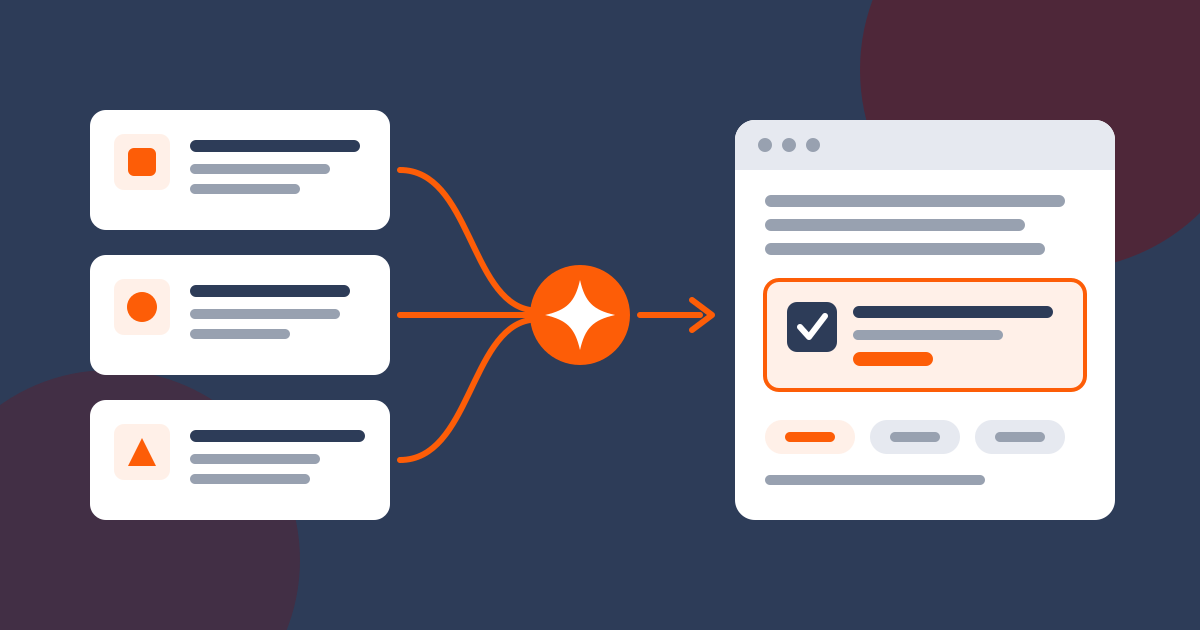
A traditional search engine shows you a list of links and leaves the reading to you. A generative engine does the reading for you. It takes your question, searches for relevant pages, pulls information from several of them and writes a single answer, usually with small citations or links to the pages it used.
Examples you have probably used include Google’s AI Overviews (the summary above the normal results) and AI Mode, which Google’s Africa blog announced for Africa on 21 August 2025, plus ChatGPT search, Gemini, Perplexity, Microsoft Copilot and Claude when they search the web.
Google still handles the vast majority of South African searches: StatCounter puts it at 92.89% in October 2026, with Bing at 6.28%. So for most local businesses, Google’s AI features matter most, with ChatGPT as the second place to check.
Where the Term GEO Comes From
GEO was named in the paper “GEO: Generative Engine Optimization” by Pranjal Aggarwal, Vishvak Murahari, Tanmay Rajpurohit, Ashwin Kalyan, Karthik Narasimhan and Ameet Deshpande. It went onto arXiv on 16 November 2023 and was published at KDD 2024, a major data science conference, in Barcelona in August 2024.
The authors built a test set of about 10,000 queries across 25 subject areas (they called it GEO-bench) and tried nine ways of rewriting web content to see which ones made AI answers use that content more.
What the research found
| Method tested | Result in the main test |
|---|---|
| Adding relevant quotations | Best single method |
| Adding statistics | Second best |
| Making the writing more fluent | Clear improvement |
| Citing credible sources | Clear improvement |
| Keyword stuffing | Little or no gain, and below the unchanged page on the main measure |
Two findings are especially useful for small businesses:
- Lower-ranked pages gained the most. In the lab test, a page ranked fifth among the five sources gained up to 115% in visibility with the “cite sources” method, while the top-ranked page lost about 30%. That only applies once your page is among the sources an AI tool reads.
- Old SEO tricks don’t carry over. Keyword stuffing gave little or no gain, so ignore anyone still selling it.
What the “40%” figure really means
Many articles repeat that “GEO can boost visibility by up to 40%” as if it were a business result. It isn’t. In the paper, visibility is a measurement of how many words from a source appear in the AI answer, weighted by how early it is cited. The main experiments ran on the authors’ own simulated engine, which passed the top five Google results to OpenAI’s GPT-3.5-turbo model. A smaller test on Perplexity, with 200 queries and the source text uploaded as files, showed gains of up to 22% on the word-count measure (adding quotations) and up to 37% on a second, AI-scored measure (adding statistics).
The authors list their own limits: only two engines were tested, the methods may need to change as AI engines change, and the effect on normal search rankings was not measured. Later research is more cautious still. A peer-reviewed paper at EMNLP 2026 found that the best rewriting tactics change as more people optimise for AI, and a 2026 preprint reviewing 45 GEO studies rejects the 40% figure as a general claim. So treat GEO tactics as good writing habits, not a formula.
GEO vs SEO vs AEO
The three terms overlap, and you will see them used loosely. Here is the practical difference:
| SEO | AEO | GEO | |
|---|---|---|---|
| Goal | Rank in search results | Be the direct answer | Be used and cited in AI-written answers |
| Where it shows | Google’s links and map pack | Featured snippets, AI Overviews, voice assistants | ChatGPT, Gemini, Perplexity, Copilot, AI Overviews |
| What you measure | Rankings, clicks, enquiries | Snippets and AI Overview appearances | Mentions, citations and AI referrals |
| Foundation | Crawlable, useful pages | Clear answers on those pages | The same pages, plus trust signals elsewhere on the web |
Answer engine optimisation (AEO) focuses on being the direct answer to a question, and it deserves a guide of its own. In practice, an agency calling its work “GEO”, “AEO”, “AI SEO” or “LLM optimisation” is usually describing the same set of tasks.
The important point is that GEO builds on SEO rather than replacing it. Google says no special optimisations are needed to appear in AI Overviews or AI Mode, and the usual SEO best practices still apply. A page needs to be indexed and eligible to show with a snippet in Google Search, and your site must not be excluded through the Search generative AI setting in Search Console. Sites are included by default. Google now mentions AEO and GEO by name in its own guide to AI search and says many of the “hacks” sold under those labels aren’t needed for Google Search. ChatGPT search, Perplexity and Copilot also rely on pages their crawlers can reach, so a site that search engines struggle to crawl or index gives AI tools little to work with. Our guide on how to improve your SEO covers those basics.
Why GEO Matters for a South African Small Business
AI answers change how people click. A Pew Research Center study of 900 US adults in March 2025 found that people clicked a normal search result on 8% of visits when an AI summary appeared, against 15% when none did, and clicked a link inside the summary on only 1% of visits. These are US figures and South African behaviour may differ, but the direction is clear: more questions get answered on the results page, and the businesses named in the answer get the attention.
That matters for local service businesses, because customers increasingly ask questions like “who does affordable web design in Durban?” or “which electrician in Centurion is open on Saturdays?” If an AI tool answers with three names, you want to be one of them, with the right phone number and the right services.
How to Do GEO: A Practical Plan
None of this needs special software. Most of it is good website housekeeping.
1. Answer the questions your customers actually ask
Write down the ten questions you hear most often on the phone or WhatsApp, then answer each one clearly on your site, ideally in the first sentence or two under a heading. “How much does a geyser replacement cost in Pretoria?” deserves a direct answer with a price range. Microsoft’s guidance for AI answers makes the same point: clear headings, self-contained answers, lists and tables, and no key information hidden in images, PDFs or tabs.
2. Add real facts, figures and sources
This is the research’s strongest finding. Where you can, include specific, checkable facts: your prices, call-out areas, turnaround times, the standards you follow, and figures from credible sources with a link. Never invent statistics or testimonials.
3. Keep your business details identical everywhere
Your business name, address, phone number, hours and services should match on your website, your Google Business Profile and every directory. Google’s own advice for AI features includes keeping your Business Profile up to date. Our local SEO guide explains how to clean up your listings.
4. Let the right crawlers in
AI tools use separate crawlers for search and for training, and you can treat them differently:
| Company | Search crawler (lets you appear in answers) | Training opt-out (you can block it) |
|---|---|---|
| OpenAI (ChatGPT) | OAI-SearchBot | GPTBot |
| Anthropic (Claude) | Claude-SearchBot | ClaudeBot |
| Perplexity | PerplexityBot (not used for training) | None listed |
| Googlebot (also covers AI Overviews and AI Mode) | Google-Extended, a robots.txt token for Gemini training and grounding that does not affect Search |
Blocking a training crawler doesn’t remove you from AI search. Blocking a search crawler, or having a firewall that blocks it without you knowing, can. Our guide on getting your business recommended by ChatGPT shows a sample robots.txt and how to check your Cloudflare settings.
5. Use structured data, but don’t expect magic
Schema markup, such as LocalBusiness or FAQPage, helps search engines read your details reliably. Google says no special schema is needed for its AI features, and the markup must match what the page shows. Use it because it is good practice. You can build LocalBusiness markup with our free local business schema generator.
6. Earn genuine mentions on other sites
AI tools don’t only read your website. A 2025 research preprint by Chen and colleagues found that AI search engines strongly favour earned media, meaning independent sites writing about a business, over a brand’s own pages. For a small business that means real reviews, local news coverage, industry association listings and suppliers or partners who mention you. You can’t buy these honestly, but you can earn them over time.
7. Measure what you can
- Ask the AI tools yourself. Once a month, ask ChatGPT, Gemini and Perplexity the questions your customers would ask, and note whether you are mentioned and what they say.
- Google Search Console. The Generative AI performance report shows how often links to your pages appeared in AI Overviews and AI Mode. Clicks from AI features are counted in the normal Performance report under the Web search type.
- Bing Webmaster Tools. Its AI Performance report, released as a public preview in February 2026, shows how often your pages are cited in Copilot and Bing’s AI summaries.
- Google Analytics. Look for referrals from chatgpt.com, perplexity.ai and similar sites, and ask new customers how they found you.
GEO Red Flags: What Not to Pay For
Because GEO is new, it attracts hype. Be careful of anyone who:
- Guarantees you will be recommended by ChatGPT or any other AI tool. Nobody controls what these tools say, and OpenAI says placement is not guaranteed.
- Quotes "40% more visibility" as a promised business result. It was a lab measurement.
- Sells an llms.txt file as essential. Google says Google Search ignores llms.txt and similar files. It may help some other tools, but there is no evidence yet that it brings customers.
- Wants to rewrite your site into short chunks or pad it with long lists of long-tail phrases. Google's AI optimisation guide says that for Google Search there is no need to break content into tiny pieces or chase every long-tail variation.
- Charges for "AI optimisation" while your basics are broken: a slow site, pages Google hasn't indexed or a Business Profile with the wrong number.
- Uses statistics without sources. Be wary of dramatic AI traffic-loss figures that don't name the study they come from.
Frequently Asked Questions
Is GEO the same as SEO?
Not quite, but it is built on it. SEO aims to rank your pages in search results. GEO aims to get your content used and cited when AI tools write an answer. Both reward crawlable, useful pages with clear answers, and Google says normal SEO best practice applies to its AI features.
Does GEO replace SEO?
No. AI tools still rely on web pages and search indexes for their facts. Doing GEO without solid SEO is like printing flyers with the wrong phone number.
Do I need an llms.txt file for GEO?
No. Google says Google Search ignores llms.txt and similar files. It is an optional extra for some other AI tools, not a requirement.
Can a small business do GEO itself?
Yes. Answering customer questions clearly, adding real facts and prices, keeping your details consistent, allowing search crawlers and earning genuine reviews and mentions are all things an owner can do. Paid help is useful mainly to save time and to check the technical side.
How long does GEO take to work?
There is no fixed timeline. Changes to your own pages can be picked up as soon as they are recrawled. OpenAI says robots.txt changes take about 24 hours to reach ChatGPT search. Earning mentions and trust on other sites usually takes months. Nobody can guarantee an AI tool will mention you.
Get Help With GEO for Your Business
You can do most of this yourself. If you would rather hand it over, our AI search optimisation service starts with an AI search visibility audit for R3,950 once-off: we check how ChatGPT, Gemini, Perplexity and Google AI Overviews describe your business today and give you a prioritised list of fixes. Ongoing AI search visibility checks are part of our Business SEO plan at R4,950 a month (standard price; see our SEO plans for current offers). We won’t promise you an AI recommendation, because nobody honestly can.
Sources
All sources checked 23 November 2026. Our own prices are from our price list.
- Aggarwal et al., “GEO: Generative Engine Optimization” (arXiv 2311.09735, KDD 2024)
- Full text of the GEO paper (arXiv HTML, v3)
- Sourirajan et al., “Beyond the Vacuum” (EMNLP 2026, ACL Anthology)
- Martinez, critical survey of GEO studies (arXiv preprint, July 2026)
- Chen et al., AI search and earned media (arXiv preprint 2509.08919)
- Google Search Central: AI features and your website
- Google Search Central: AI optimisation guide
- Google Search Central Blog: Top ways to ensure your content performs well in Google’s AI experiences on Search (May 2025)
- Google Search Console Help: Generative AI performance report
- Google Search Console Help: Search generative AI setting
- Google crawlers: common crawlers and Google-Extended
- Google Africa Blog: Introducing AI Mode in Africa (21 August 2025)
- OpenAI: Overview of OpenAI crawlers
- OpenAI Help Center: Searching the web with ChatGPT
- Anthropic: Does Anthropic crawl data from the web?
- Perplexity: Perplexity crawlers
- Microsoft Advertising: Optimizing your content for inclusion in AI search answers (October 2025)
- Bing Webmaster Blog: AI Performance in Bing Webmaster Tools (February 2026)
- Pew Research Center: Google users are less likely to click on links when an AI summary appears (July 2025)
- StatCounter: Search engine market share in South Africa
Web Design Hosting SA has hosted and built websites for South African businesses since 2009. Prices in our guides come from our live price list and are checked when a guide is updated. How we write our guides. Spotted something out of date? Tell us.